



Can Stone Veneer Be Used Outside? A Guide to Exterior Stone Veneer
Yes, suitable natural stone veneer can be used outside. Lite Stone slate veneer and limestone veneer can be used for exterior applications when installed onto an appropriate substrate using the correct adhesive and properly sealed after installation.
The thin, lightweight construction of stone veneer makes it possible to create genuine natural stone exterior surfaces without the thickness and weight associated with traditional stone cladding.
Stone veneer can be used to transform exterior feature walls, garden walls, building façades and other suitable outdoor surfaces, but correct preparation and installation are particularly important when the material will be exposed to the weather.
What Types of Stone Veneer Can Be Used Outside?
Our slate veneer and limestone veneer can be used for suitable exterior applications.
Not every decorative veneer material is designed for outdoor use, so it is important to check the suitability of the particular product before installation rather than assuming that all veneers can be installed externally.
Exterior materials need to cope with changing temperatures, rain and other environmental conditions, making the choice of material, substrate, adhesive and sealer particularly important.
If you are unsure whether a particular Lite Stone product is suitable for your exterior project, contact us before installation and we can advise you.
Is Exterior Stone Veneer Real Stone?
Yes. Lite Stone slate and stone veneer has a genuine natural stone surface.
The natural stone is separated into a very thin layer and supported by a reinforced backing made using fibreglass mesh, cotton and polymer resin.
This construction produces a much thinner and lighter material than conventional stone tiles or slabs while retaining the natural colour, markings and texture of genuine stone.
Because it is a natural material, every sheet is unique and variations in colour, pattern and texture should be expected.

Where Can Exterior Stone Veneer Be Used?
Suitable stone veneer can be used for a variety of exterior applications, including:
Exterior feature walls
Garden walls
Outdoor entertaining areas
Building façades
Entrance features
Exterior columns and architectural details
Landscaped garden features
The suitability of the existing surface should always be assessed before installation.
Stone veneer is thin and lightweight, but it still needs a stable, flat and appropriately prepared substrate to provide a durable finished installation.
What Surface Should Exterior Stone Veneer Be Installed Onto?
Exterior stone veneer should be installed onto a suitable flat, level and stable substrate.
For exterior installations, we recommend using an appropriate exterior-grade cement board or similar suitable substrate rather than fixing stone veneer directly onto uneven blockwork.
Creating a flat and stable surface makes it easier to achieve good contact between the veneer and adhesive across the complete sheet.
The substrate should be clean, dry and properly prepared before installation. Any loose material, dirt or contamination that could affect adhesion should be removed.
Correct substrate preparation is one of the most important parts of a successful exterior installation.
Can Stone Veneer Be Installed Directly Onto Blockwork?
For our slate and stone veneer sheets, we recommend creating a suitable flat substrate, such as exterior-grade cement board, rather than bonding the veneer directly onto blockwork.
Blockwork can be uneven, and the veneer requires good contact with the adhesive and substrate across the sheet.
If your project involves an existing exterior wall and you are unsure how it should be prepared, seek appropriate installation advice before fixing the material.
Split face cladding is different from stone veneer and can be installed directly onto suitable brickwork or blockwork. For information about this material, see our Split Face Cladding guide.
Preparing Stone Veneer for Exterior Installation
Before installation, lay out the sheets that will be used together on a flat surface.
Natural stone varies from sheet to sheet, so arranging the material before fixing allows you to distribute colour, markings and texture attractively across the finished wall.
Check the substrate carefully at the same time. It should be flat, stable, clean and suitable for exterior use.
Planning the sheet positions before applying adhesive also allows you to decide where joints and cut edges will fall, particularly around corners, windows, doors and other architectural details.
What Adhesive Should Be Used Outside?
Exterior stone veneer requires an adhesive suitable for the material, substrate and outdoor conditions.
Good contact between the veneer and substrate is particularly important. The adhesive should be applied evenly so that the sheet is fully supported without unnecessary hollow areas behind it.
Avoid applying excessive adhesive immediately around the edges of the sheet, as it can spread beyond the joint when the veneer is pressed into position.
If you are unsure which adhesive is appropriate for a particular exterior installation, contact us before beginning the project.
How Do You Install Stone Veneer Outside?
Begin by making sure the substrate is properly prepared, flat, stable and suitable for exterior use.
Lay out the stone veneer sheets before installation and decide how the natural patterns and colours should flow across the wall.
Measure and cut the sheets as required before applying adhesive.
Apply the appropriate adhesive evenly to achieve good contact between the veneer and substrate. Position each sheet carefully and press it firmly and evenly into place using a suitable float or roller.
Continue across the wall while checking the alignment of the sheets and the appearance of neighbouring pieces.
Pay particular attention to edges, corners, openings and other areas where water could potentially enter behind the installation.
For more detailed fitting information, see our Stone Veneer Installation Guide.

How Do You Cut Exterior Stone Veneer?
Slate and stone veneer sheets can be cut using an angle grinder with a suitable tile blade, a multi-tool or a tile saw.
The best tool will depend on the material and the type of cut required.
Measure and mark each cut carefully, particularly around windows, doors, corners and other visible architectural features.
If you have not worked with stone veneer before, practise on a sample or offcut before making important cuts to full-size sheets.
How Are External Corners Finished?
External corners can be created by carefully butt-jointing the veneer sheets.
For a neater finish, masking tape can be applied along each side of the corner before the joined edges are carefully sanded with suitable sandpaper. This can help remove sharp edges and create a smoother finished corner.
Accurate cutting and positioning are particularly important on prominent exterior corners.
Does Exterior Stone Veneer Need Sealing?
Yes, we recommend sealing stone veneer used externally.
Natural stone is exposed to rain, moisture, dirt and other environmental conditions when installed outside. A suitable natural stone sealer helps protect the surface.
The appropriate sealer should be selected for the particular type of natural stone and the appearance you want to retain.
If you want to maintain the natural colour of the stone without significantly enhancing or darkening it, choose a suitable non-colour-enhancing natural stone sealer.
Suitable sealers are available from our accessories range.
Does Exterior Stone Veneer Need Maintenance?
Like other natural stone surfaces exposed to the weather, exterior stone veneer may require occasional cleaning and maintenance.
Loose dirt can be removed using a soft-bristled brush. Where wet cleaning is necessary, use a suitable pH-neutral natural stone cleaner.
Avoid harsh acidic or strongly alkaline cleaners unless they are specifically approved for the particular natural stone.
The condition of the installation and sealer should also be checked periodically, particularly on surfaces exposed to significant weathering.
Can Stone Veneer Be Used on Curved Exterior Surfaces?
The flexible construction of stone veneer means it can follow some curved surfaces, providing the substrate and particular application are suitable.
For tighter curves, gently warming the resin backing with a heat gun can make the sheet more malleable and easier to form.
Do not overheat the material. Gentle warming of the backing is normally sufficient.
Curved exterior applications still require a stable, suitable substrate and careful installation to ensure good contact across the complete sheet.
Stone Veneer vs Split Face Cladding Outside
Both stone veneer and split face cladding can provide a genuine natural stone exterior finish, but they create very different appearances.
Stone veneer is thin, lightweight and relatively flat. It is particularly useful where keeping the thickness and weight of the finished surface to a minimum is important.
Split face cladding is thicker and has a much more pronounced three-dimensional texture. The individual stone pieces create greater variation in depth and stronger shadows across the wall.
The substrate requirements also differ. For exterior stone veneer, we recommend a suitable level substrate such as exterior-grade cement board. Split face cladding can be installed directly onto suitable brickwork or blockwork.
The right choice depends on the appearance, construction and requirements of the particular project.
Exterior Stone Veneer Design Ideas
Natural stone veneer can be used to introduce texture and variation to selected areas of an exterior rather than covering an entire building.
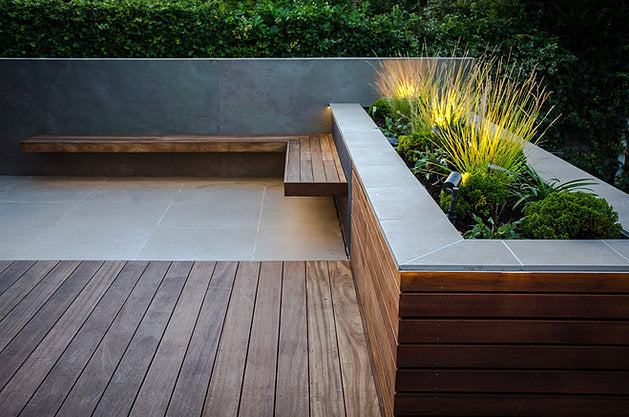
A stone-clad garden wall can create a natural backdrop for planting and outdoor seating. Feature sections of a building can be clad to contrast with render, timber, glass or other exterior finishes.
Stone veneer can also be used to highlight entrances, architectural features and outdoor entertaining spaces.
Because every sheet is made from natural stone, the variations in colour and pattern can work particularly well alongside landscaping and other natural materials.
Choosing Stone Veneer for an Exterior Project
Start by confirming that the particular veneer is suitable for exterior use.
Next, consider the existing wall construction, the substrate required and how the installation will be exposed to weather.
Colour and natural variation are also important. We recommend ordering samples so you can see the material outside and assess how it looks in natural daylight alongside the other finishes used on the property.
For larger projects, laying out several sheets before installation will give a better indication of the natural variation across the finished surface.
If you are unsure how much material you require, send us your measurements or a rough sketch and we can help calculate the quantity needed.
Explore Stone Veneer for Exterior Walls
Suitable natural stone veneer provides a lightweight way to introduce genuine stone to exterior walls, garden features and architectural details.
Lite Stone slate veneer and limestone veneer can be used for suitable exterior applications when correctly installed and sealed.
Explore our Slate & Stone Veneer collection to see available finishes and order samples, read our Stone Veneer Installation Guide for detailed fitting information, or visit our Project Gallery to see examples of Lite Stone materials used on completed exterior projects.


