



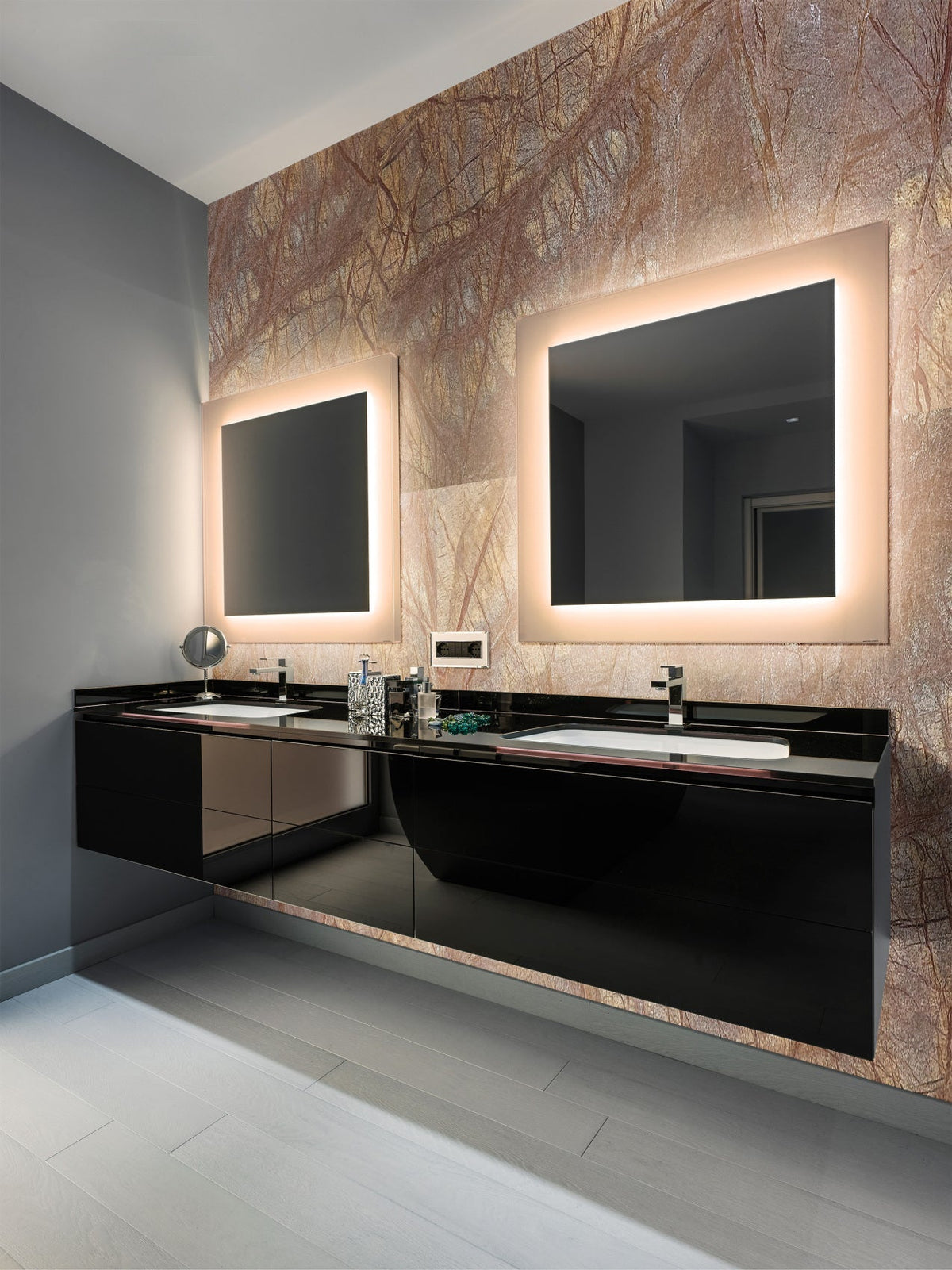
Can Stone Veneer Be Used in Bathrooms and Showers?
Yes. Suitable natural stone veneer can be used in bathrooms, shower enclosures and wet rooms, providing the area is correctly prepared and waterproofed before installation.
The thin, lightweight construction of stone veneer makes it particularly useful for bathroom walls, where it can introduce the colour, texture and natural variation of genuine stone without the thickness and weight associated with traditional stone tiles or slabs.
Correct waterproofing, adhesive selection and sealing are particularly important when natural stone veneer is installed in areas regularly exposed to water.

Is Stone Veneer Suitable for Shower Walls?
Yes. Our slate veneer can be used on shower walls when installed onto a properly prepared and waterproofed substrate.
The shower area must be correctly tanked before the stone veneer is installed. The veneer itself should not be treated as the waterproofing layer.
A suitable adhesive should then be used to bond the veneer to the prepared surface, and the natural stone should be sealed after installation to help protect it from moisture and staining.
Can Stone Veneer Be Used in a Wet Room?
Yes. Slate veneer can also be used on suitable wet-room walls.
As with a shower enclosure, the area behind the veneer needs to be properly tanked and waterproofed before installation.
Wet rooms are regularly exposed to water, so careful substrate preparation, good adhesive coverage and appropriate sealing of the natural stone are particularly important.
If you are planning a wet-room installation and are unsure about the construction of the waterproofed substrate, seek appropriate professional advice before installing the veneer.
Is Stone Veneer Waterproof?
Natural stone veneer should not be used as a substitute for a proper waterproofing or tanking system.
In shower enclosures and wet rooms, the substrate should be correctly waterproofed before the veneer is installed.
The stone surface should also be sealed using a suitable natural stone sealer. Sealing helps protect the natural stone from moisture and staining, but it does not replace the waterproof layer behind the finished wall covering.
Thinking of the installation as a complete system — waterproof substrate, suitable adhesive, stone veneer and appropriate sealer — is important in wet areas.
Why Use Stone Veneer in a Bathroom?
Natural stone can introduce texture, colour and character into a bathroom, while stone veneer provides this appearance in a thin and lightweight format.
The visible surface is genuine natural stone, so every sheet has its own variations in colour, markings and texture.
Stone veneer can be particularly effective for:
Shower walls
Wet-room walls
Bathroom feature walls
Walls behind freestanding baths
Vanity areas
Bath panels
Decorative wall sections
Its thin construction can also be useful in refurbishment projects where keeping additional wall thickness to a minimum is desirable.

What Surface Should Stone Veneer Be Installed Onto in a Bathroom?
Stone veneer should be installed onto a flat, stable and appropriately prepared substrate.
In shower enclosures, wet rooms and other areas directly exposed to water, the substrate must form part of a suitable waterproofed or tanked system.
The surface should be clean, dry and free from dust, grease and other contamination before installation begins.
Good preparation is particularly important with veneer because the sheets need even contact with the adhesive and substrate.
Can Stone Veneer Be Installed Over Existing Bathroom Tiles?
Stone veneer can be installed over existing tiles in suitable situations, provided the existing tiled surface is flat, level and securely fixed.
The existing surface must also be properly prepared so that the adhesive can form a reliable bond.
In wet areas, particular care needs to be taken with the underlying waterproofing. Installing veneer over existing tiles does not correct problems with an inadequate or failed waterproofing system behind them.
If there is any uncertainty about the condition of an existing shower or wet-room installation, this should be investigated before covering it with a new surface.
What Adhesive Should Be Used in a Shower or Bathroom?
For bathroom and shower applications, use an adhesive suitable for the veneer, substrate and wet-area conditions.
A suitable hybrid polymer or epoxy resin-based adhesive can be used for slate veneer in wet areas.
Good adhesive coverage is important. Apply the adhesive evenly so that there is full contact between the veneer and substrate, avoiding hollow areas or unnecessary gaps behind the sheet.
For detailed information about working with our materials, see our Stone Veneer Installation Guide.
Preparing the Stone Veneer Before Installation
Before fixing the sheets, lay out all the material that will be used in the same area.
Because the surface is natural stone, every sheet will have its own variations in colour and pattern. Arranging the sheets beforehand allows you to decide how these variations should flow across the finished bathroom wall.
This is particularly useful on larger shower walls or feature walls where several sheets will be positioned next to one another.
Plan the location of joints, corners, shower fittings, taps, sockets and other features before applying adhesive.
How Do You Install Stone Veneer in a Shower?
First make sure that the shower or wet-room substrate has been correctly prepared and waterproofed.
Measure the area carefully and cut the veneer sheets as required before bonding them into position.
Masking tape can be applied to the edges of the stone surface to help prevent adhesive getting onto the visible face during installation.
Apply the appropriate adhesive evenly and press the sheet firmly onto the substrate, ensuring good contact across the entire surface.
Continue across the wall while checking the alignment and appearance of neighbouring sheets.
Take particular care around corners, shower controls, pipework and other fittings where accurate cutting and finishing will be more noticeable.
How Do You Cut Stone Veneer Around Bathroom Fittings?
Slate and stone veneer can be cut using an angle grinder with a suitable tile blade, a multi-tool or a tile saw.
The best tool will depend on the type of cut required.
Carefully measure the position of shower controls, taps, pipes and other fittings before cutting the sheet.
For detailed or unusual cuts, making a template first can help reduce the risk of mistakes.
If you have not worked with stone veneer before, practise on a sample or offcut before making important cuts to a full-size sheet.
Does Stone Veneer Need Grouting in a Shower?
Stone veneer sheets can be installed with tightly butted joints to create a continuous natural stone appearance.
This is different from a conventional tiled wall where regular grout joints are normally left between individual tiles.
Careful cutting and positioning are important, particularly in a shower where the finished wall will be viewed at close range.
Remember that the finished stone surface and its joints are not a replacement for the waterproofing system behind the installation.
Does Stone Veneer Need Sealing in a Bathroom?
Yes. We recommend sealing natural stone veneer when it is used in bathrooms, showers and wet rooms.
A suitable natural stone sealer helps protect the surface from moisture, soap, staining and other contaminants encountered in a bathroom environment.
If you want to retain the natural appearance of the stone, choose an appropriate non-colour-enhancing sealer.
Suitable natural stone sealers are available from our accessories range.
How Do You Clean Stone Veneer in a Shower?
Use cleaning products suitable for natural stone.
For routine cleaning, a pH-neutral natural stone cleaner is preferable. Avoid acidic or strongly alkaline cleaners, which may affect some types of natural stone.
Do not use abrasive scourers or hard brushes that could scratch or damage the surface.
Regular gentle cleaning is preferable to allowing soap residue and other deposits to build up on the stone.
The condition of the sealer should also be checked periodically and maintained as appropriate for the particular product and level of use.
Can Stone Veneer Be Used Behind a Bath?
Yes. Stone veneer can create an effective feature wall behind a bath, including areas surrounding freestanding baths.
Where the wall is likely to receive occasional water splashes rather than continuous shower exposure, sealing the natural stone is still recommended to help protect the surface.
The substrate should remain flat, stable and suitable for the installation.
Using natural stone behind a bath can create a focal point while allowing the remaining bathroom walls to use simpler finishes.
Can Stone Veneer Be Used on a Bath Panel?
Yes. Stone veneer can be used to create a natural stone finish on a suitable bath panel.
Its thin and lightweight construction makes it particularly useful for applications such as this, where a thick conventional stone slab could be impractical.
The panel needs to be sufficiently stable and suitable for bonding the veneer.
Consider access requirements before covering removable bath panels, particularly where future access to plumbing may be necessary.
Stone Veneer vs Traditional Stone Tiles in a Bathroom
Both stone veneer and traditional stone tiles can introduce genuine natural stone into a bathroom, but their construction is very different.
Traditional stone tiles are thicker, heavier and rigid. Stone veneer uses a very thin layer of natural stone supported by a reinforced backing.
This makes veneer significantly thinner and lighter and allows it to follow some curved surfaces.
Large veneer sheets can also create broad areas of natural stone with fewer joints than would normally be required when using smaller conventional tiles.
The right material will depend on the design, substrate and requirements of the particular bathroom.
Choosing Stone Veneer for a Bathroom
Consider the size of the room, lighting, cabinetry, sanitaryware and other surfaces when selecting a stone finish.
A strongly patterned stone can create a dramatic feature wall, while a more restrained finish can introduce texture without dominating the space.
Natural and artificial lighting can also change the appearance of stone considerably.
Because every sheet is unique, ordering samples allows you to see the real colour, texture and markings alongside the other materials being used in the bathroom.
Bathroom Stone Veneer Ideas
Stone veneer does not need to cover every wall to make an impact.
A single shower wall can become a natural stone feature, while veneer behind a freestanding bath can provide a strong focal point.
Other possibilities include vanity walls, bath panels and selected decorative areas combined with painted walls, tiles, timber or other bathroom finishes.
Our Project Gallery includes examples of Lite Stone materials used in bathrooms, showers and other completed residential projects.

Explore Stone Veneer for Bathrooms and Showers
Natural stone veneer can provide a distinctive alternative to conventional bathroom wall finishes, combining genuine stone with a thin and lightweight construction.
When used in showers and wet rooms, correct waterproofing, suitable adhesive and appropriate sealing are essential parts of the installation.
Explore our Slate & Stone Veneer collection to compare available finishes and order samples, read our Stone Veneer Installation Guide for detailed fitting information, or visit our Project Gallery for inspiration from completed Lite Stone projects.


