



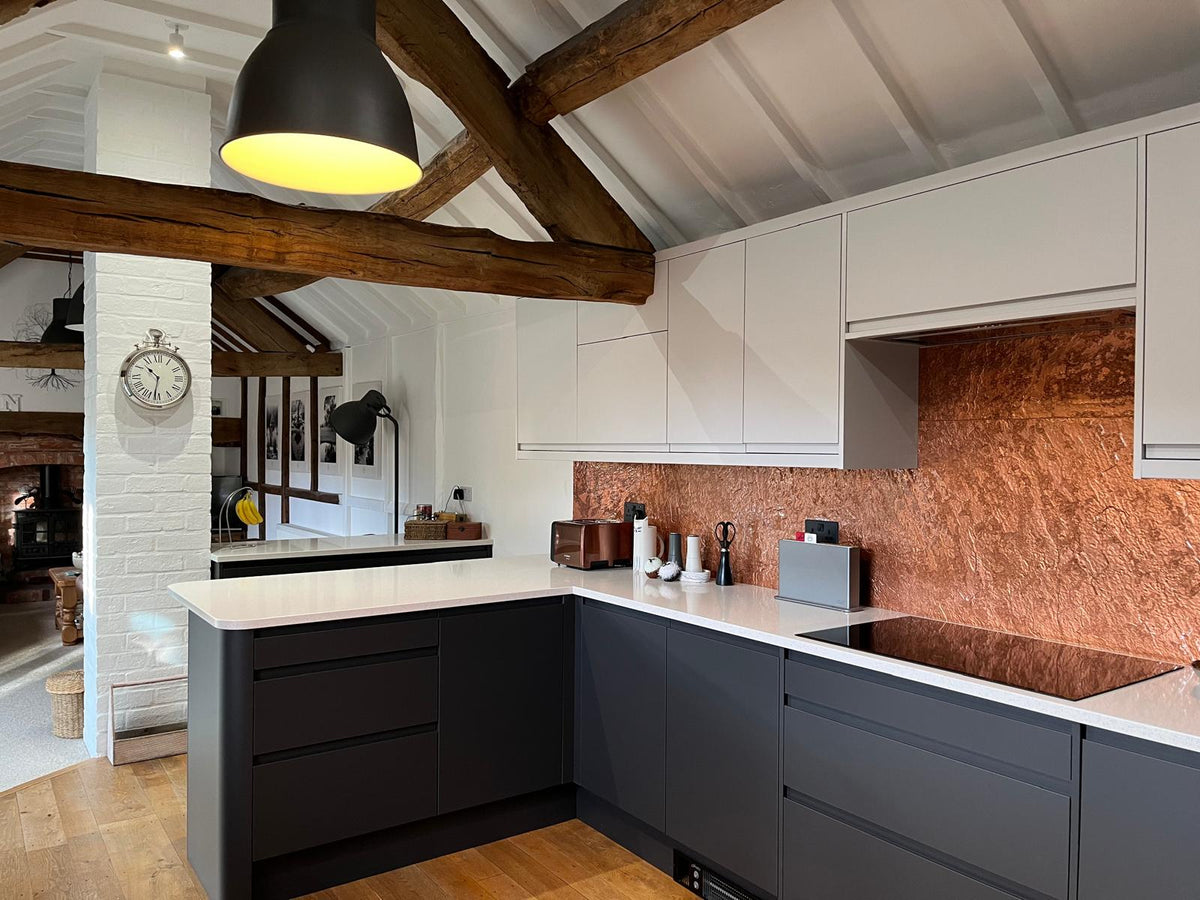
Stone & Metal Veneer for Kitchens: Splashbacks, Islands & Feature Walls
Kitchens are an ideal place to introduce natural materials, texture and character, and veneer makes it possible to achieve a distinctive finish without the weight and thickness associated with traditional stone or metal panels.
Natural stone veneer and metal veneer can be used in a variety of kitchen applications, including splashbacks, feature walls, kitchen islands, cabinet doors and bespoke furniture.
The two materials create very different effects. Natural stone veneer introduces the unique colour, pattern and texture of genuine stone, while metal veneer can create a more contemporary metallic finish. Both can be used to transform individual features without necessarily changing the entire kitchen.

Where Can Veneer Be Used in a Kitchen?
Stone and metal veneers can be used creatively throughout a kitchen.
Popular applications include:
Kitchen splashbacks
Feature walls
Kitchen islands and breakfast bars
Cabinet and cupboard doors
End panels
Bespoke furniture
Dining areas
Decorative wall panels
Because veneer is relatively thin, it can be particularly useful for refurbishing or adding a new surface finish without introducing the bulk associated with conventional stone slabs or other heavy materials.
The exact material should always be chosen according to the location and the conditions it will experience.
Stone Veneer for Kitchen Splashbacks
Natural stone veneer can create a distinctive kitchen splashback while keeping the installation relatively thin and lightweight.
Rather than using a repeating printed stone effect, the visible surface is genuine natural stone. Each sheet therefore has its own markings, colour variations and texture.
Large veneer sheets can also reduce the number of joints compared with many conventional tiles, creating broad areas of continuous natural stone.
Our standard slate and stone veneer sheets measure 122 x 61cm, with larger 240 x 120cm jumbo sheets available in many finishes.
Before installation, lay out the sheets and consider how the natural patterns and colours work together. This is particularly useful for splashbacks running across a long section of worktop.
Metal Veneer for Kitchen Splashbacks
Metal veneer offers a very different appearance and can work particularly well in contemporary kitchens.
Copper and other metallic finishes can introduce warmth and contrast alongside materials such as timber, painted cabinetry and stone worktops.
Lighting can also have a significant effect on the finished appearance. Under-cabinet lighting, for example, can emphasise the surface and create different highlights across a metal veneer splashback.
As with any kitchen surface, the location should be considered carefully, particularly where the material may be exposed to regular splashes, heat or cleaning products.
Using Stone Veneer on Kitchen Islands
A kitchen island provides a large visible surface that can be ideal for stone veneer.
Cladding the sides or front of an island can introduce natural stone into the room without covering every wall. This can create a focal point while allowing the surrounding cabinetry and worktops to remain relatively simple.
The thin construction of stone veneer makes it particularly useful where adding a thick stone facing would significantly increase the dimensions or weight of an existing island.
Natural stone also works well alongside timber, painted cabinets, glass and a wide variety of worktop materials.
Using Metal Veneer on Kitchen Islands and Furniture
Metal veneer can also be used to transform kitchen islands, breakfast bars and bespoke furniture.
A metallic surface can provide contrast against more traditional kitchen materials and can be used either as a small accent or across a larger feature.
Copper finishes can introduce warmer tones, while other metal finishes can create a more industrial or contemporary appearance.
Using veneer selectively can often create more impact than applying the same material throughout the entire kitchen.

Can Stone Veneer Be Used on Kitchen Cabinet Doors?
Yes. Stone veneer can be used to clad suitable cabinet doors and furniture, creating the appearance of natural stone without the weight of a solid stone panel.
We have supplied stone veneer for kitchen cabinet doors in a number of projects, demonstrating how the material can be incorporated into bespoke joinery as well as conventional wall applications.
The substrate needs to be suitable, flat and properly prepared, and the additional material should be considered when planning hinges, handles, edges and clearances.
Because every sheet of natural stone varies, neighbouring doors can be laid out before installation to achieve an attractive flow of colour and pattern across the cabinetry.
Stone Veneer vs Metal Veneer in a Kitchen
The choice between stone and metal veneer will largely depend on the appearance you want to create and where the material will be installed.
Natural stone veneer provides genuine stone colour, markings and texture. It works particularly well where the aim is to introduce an organic, tactile material into the kitchen.
Metal veneer creates a more distinctly metallic appearance and can be particularly effective in contemporary, industrial or statement kitchen designs.
The two materials do not necessarily have to be treated as alternatives. Different finishes can be combined with timber, painted cabinetry and other surfaces to create contrast throughout the room.
Choosing a Stone Veneer for Your Kitchen
Natural stone varies considerably in colour and character, so the choice of veneer can have a major influence on the overall appearance of the kitchen.
Consider the colours already present in the cabinetry, worktops, flooring and walls. A strongly patterned stone can become a focal point, while a more restrained finish can provide natural texture without dominating the room.
Lighting should also be considered. Daylight and artificial lighting can affect how the colours and texture of natural stone appear at different times of day.
Ordering samples is a useful way to compare materials alongside your existing kitchen finishes before making a final choice.

Choosing a Metal Veneer for Your Kitchen
Metal finishes can change significantly depending on their colour, texture and surrounding lighting.
Consider whether you want the metal to become a strong feature or complement the other materials in the kitchen.
Warm metallic finishes can work particularly well alongside timber and darker cabinetry, while contrasting combinations can create a more dramatic contemporary appearance.
Viewing samples in the actual kitchen is particularly useful because artificial lighting, daylight, worktop colours and cabinet finishes can all affect how a metallic surface appears.
Installing Stone Veneer in a Kitchen
The substrate should be clean, dry, flat and suitable for the installation.
Before fixing the sheets, lay them out so you can assess the natural variation and decide how neighbouring pieces should be positioned.
Stone veneer can be cut using an angle grinder with a suitable tile blade, a multi-tool or a tile saw, depending on the type of cut required.
For most slate and stone veneer installations, a suitable hybrid polymer adhesive can be used. Apply a thin, even layer to achieve good contact between the veneer and substrate.
Care should be taken around sockets, switches, worktops and other kitchen fittings so that cuts and edges are neat and accurately positioned.
For complete fitting information, see our Stone Veneer Installation Guide.
Does Stone Veneer Need Sealing in a Kitchen?
We recommend sealing natural stone veneer in kitchen areas where it may be exposed to water, cooking splashes, food or other contaminants.
A suitable natural stone sealer helps protect the surface from moisture and staining.
If you want to retain the natural appearance of the material, choose an appropriate non-colour-enhancing sealer.
Particular attention should be given to areas close to sinks, food preparation surfaces and other locations where the stone is more likely to come into contact with liquids or staining substances.
Cleaning Stone Veneer in a Kitchen
For general cleaning, use a pH-neutral cleaner suitable for natural stone.
Avoid acidic or strongly alkaline cleaning products and abrasive scourers that could mark or damage the natural stone surface.
Loose dust and dirt can be removed using a soft-bristled brush.
Cleaning spills promptly and maintaining the appropriate sealer will help keep the stone looking its best.
Planning a Veneer Kitchen Project
Before ordering material, measure the area carefully and consider where sheets, joints, edges, sockets and other fittings will be positioned.
For natural stone veneer, laying out the sheets before installation allows you to arrange the natural variation across the project.
It is also worth ordering samples before deciding on a finish. Photographs are useful for comparing colours and patterns, but natural stone and metallic surfaces are best assessed in person and under the lighting conditions in which they will eventually be installed.
If you are unsure how much material you require, send us your measurements or a rough sketch of the area and we can help calculate the quantity needed.
Kitchen Veneer Ideas from Lite Stone Projects
Lite Stone materials have been used in a wide range of kitchen projects.
Natural stone veneer has been used to create splashbacks, feature walls and distinctive cabinet doors, while Copper Metal Veneer has been used to produce statement kitchen splashbacks enhanced by under-cabinet lighting.
These projects demonstrate that veneer does not have to be limited to conventional wall cladding. It can also be incorporated into cabinetry, islands, furniture and other bespoke kitchen features.
Visit our Project Gallery to see examples of Lite Stone materials used in completed kitchens and other residential and commercial projects.
Explore Stone & Metal Veneer for Kitchens
Stone and metal veneers provide a versatile way to introduce natural texture, colour and distinctive surface finishes into a kitchen.
Whether you are planning a natural stone splashback, a statement kitchen island, stone-clad cabinet doors or a metallic feature, choosing the right material for the location is an important part of achieving a practical and attractive result.
Explore our Slate & Stone Veneer and Metal Veneer collections to compare available finishes and order samples. For fitting advice, read our Stone Veneer Installation Guide, or browse our Project Gallery for inspiration from completed Lite Stone projects.


