



What Is Translucent Stone Veneer? A Guide to Backlit Natural Stone
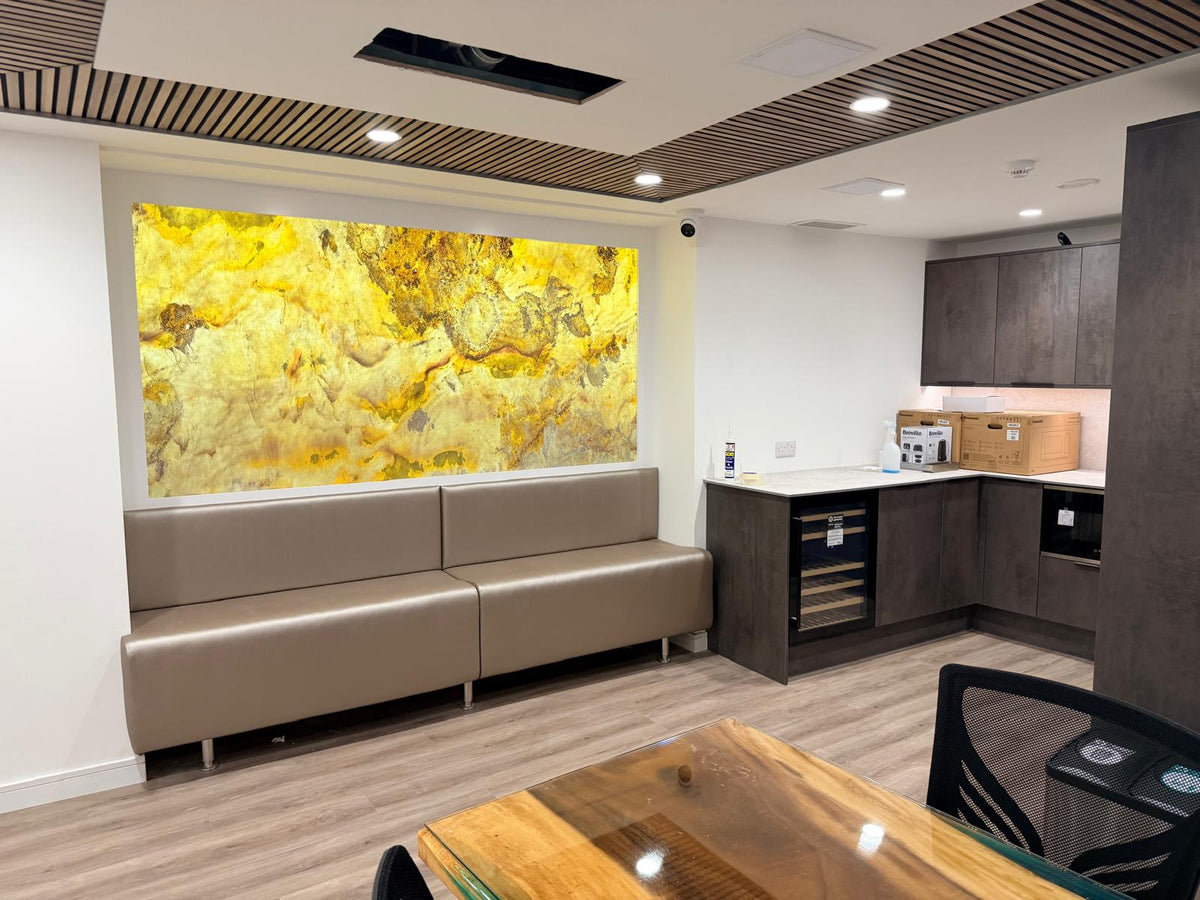
Translucent stone veneer is a thin layer of real natural stone with a transparent resin backing that allows light to pass through the material. When illuminated from behind, the natural colours, patterns and mineral characteristics of the stone become much more pronounced, creating a striking backlit stone surface.
Because the material is thin and lightweight, translucent stone veneer can be used to create illuminated feature walls, bars, counters, furniture, panels and other decorative installations without the weight and thickness associated with traditional stone slabs.
Is Translucent Stone Veneer Real Stone?
Yes. The visible surface of translucent stone veneer is genuine natural stone.
The stone is separated into a very thin layer and supported by a transparent resin backing. This construction allows light positioned behind the veneer to travel through the material and reveal details within the natural stone that may be less noticeable when it is not illuminated.
As with all natural stone, every sheet is unique. Variations in colour, pattern, mineral deposits and translucency are a natural characteristic of the material rather than a repeating manufactured design.

How Does Translucent Stone Veneer Work?
Standard stone veneer uses a reinforced backing designed primarily to support the thin natural stone surface. Translucent stone veneer instead uses a transparent resin backing that allows light to pass through the sheet.
When a suitable light source is positioned behind the veneer, the light travels through the resin and the thinner or more translucent areas of the natural stone.
The result varies considerably between different stones and even between individual sheets. Some areas may transmit more light than others, producing the natural variation that makes backlit stone distinctive.
What Does Translucent Stone Veneer Look Like When It Is Not Backlit?
Translucent stone veneer does not have to be illuminated all the time.
With the lighting switched off, the surface retains the appearance, texture and natural variation of stone. When the backlighting is switched on, different colours, markings and details within the stone become illuminated.
This means the same installation can have two different appearances depending on whether the lighting is being used.
What Types of Translucent Stone Veneer Are Available?
Our translucent range includes natural stone finishes with different colours, patterns and levels of light transmission.
Many of our translucent products use natural slate, including distinctive finishes such as Falling Leaves and Rustique. We also offer Palisandro Blue, which is a translucent Quartz-Sand veneer rather than slate.
Because these are natural materials, the appearance and amount of light passing through each sheet will vary. We recommend ordering samples when choosing a translucent stone, particularly when planning a backlit installation.
Where Can Translucent Stone Veneer Be Used?
Translucent stone veneer can be used to create a wide variety of decorative illuminated surfaces, including:
Backlit feature walls
Bars and bar fronts
Kitchen islands and counters
Reception desks
Decorative wall panels
Furniture and bespoke joinery
Commercial interiors
Hospitality and leisure spaces
The lightweight sheet format makes it particularly useful where the visual impact of illuminated natural stone is wanted without using thick, heavy stone slabs.

What Lighting Should Be Used Behind Translucent Stone Veneer?
LED lighting is normally used to illuminate translucent stone veneer because it can provide bright and efficient illumination while allowing considerable control over the design of the installation.
LED light panels can provide an even source of illumination across a large surface. LED modules can also be used, although sufficient distance should be allowed between the light source and the translucent panel to distribute the light evenly.
When using LED modules, we recommend a minimum gap of approximately 60mm between the lighting and the panel. This helps reduce visible individual LEDs or bright spots showing through the stone.
The exact distance required can vary according to the LED system, brightness, spacing between the LEDs and the natural characteristics of the stone.
Why Is Even Lighting Important?
Natural stone does not transmit light as uniformly as a manufactured translucent sheet. Different parts of the stone naturally allow different amounts of light to pass through.
This natural variation is part of the appeal, but the lighting system itself should still provide as even a source of illumination as possible.
If individual LEDs are positioned too close to the veneer, they may appear as bright spots behind the stone. Increasing the distance between the LEDs and the panel allows the light to spread before reaching the veneer, creating a more consistent illuminated surface.
For larger or more complex projects, it is worth testing the proposed lighting arrangement before completing the final installation.
What Should Translucent Stone Veneer Be Fixed Onto?
For backlit installations, translucent stone veneer can be adhered to a transparent rigid backing such as Perspex, acrylic or toughened glass.
The backing needs to be sufficiently rigid to support the veneer and suitable for the size and construction of the finished panel.
The lighting system is then positioned behind the transparent backing so that light can travel through the backing, adhesive and translucent stone veneer.
The complete construction should be planned before installation, particularly on large feature walls, bars and bespoke furniture where access to the lighting may be required in the future.

What Adhesive Should Be Used for Translucent Stone Veneer?
A transparent adhesive should be used for backlit translucent stone veneer installations.
We offer a specialist Lite Stone adhesive specifically for translucent stone veneer. Using a transparent adhesive is important because an opaque adhesive could interfere with the transmission of light through the finished panel.
Our translucent stone veneer adhesive bonds on contact, so the sheet needs to be carefully positioned before it is pressed onto the acrylic, Perspex or glass backing.
Apply the adhesive evenly so that there is good contact between the veneer and the transparent substrate.
Preparing Translucent Stone Veneer Before Installation
Before fixing the sheets, lay out all the material being used for the project and examine it both with and without illumination where possible.
Because the stone is natural, colour, pattern and translucency will vary between sheets. Arranging the sheets before installation allows you to choose the most attractive sequence and achieve good continuity across the finished surface.
This is particularly important for large backlit walls or bar fronts where several sheets will be installed next to one another.
The transparent substrate should also be clean, dry and free from dust, grease or other contamination before adhesive is applied.
How to Install Translucent Stone Veneer for Backlighting
Begin by preparing the transparent acrylic, Perspex or toughened glass backing and checking that it is flat, clean and sufficiently rigid for the installation.
Lay out the translucent veneer sheets and decide their final positions before applying adhesive. If possible, temporarily illuminate the sheets from behind during this stage so you can see how their natural patterns work together when backlit.
Measure and cut the veneer to the required dimensions before bonding it to the transparent backing.
Apply masking tape to the edges of the natural stone surface where necessary. This helps prevent adhesive from reaching the visible stone face during installation.
Apply the specialist transparent adhesive evenly and carefully position the veneer onto the transparent backing. Because the adhesive bonds on contact, take particular care with alignment before pressing the sheet firmly into its final position.
Ensure that the sheet has good, even contact with the backing and avoid leaving unnecessary gaps between the veneer and substrate.
Once the veneer has been installed, the lighting system can be positioned behind the transparent panel according to the planned design.
How Do You Cut Translucent Stone Veneer?
Translucent stone veneer can be cut using similar methods to other stone veneer sheets.
Depending on the cut required, suitable tools can include an angle grinder with a tile blade, a multi-tool or a tile saw.
Measure and mark cuts carefully before starting. If you have not worked with the material before, practising on a sample or offcut is recommended before cutting a full-size sheet.
Take additional care around visible edges and joints on backlit installations because illumination can make details in the finished construction more noticeable.
How Should Sheets Be Joined?
The appearance of joints should be considered during the planning stage, particularly on large illuminated surfaces.
Sheets can be positioned closely together to create a continuous natural stone appearance. Because every sheet has a unique natural pattern, laying out the complete installation before fixing allows neighbouring sheets to be positioned for the best visual result.
For installations where joints will be highly visible, accurate cutting and careful alignment are particularly important.
Should You Test the Lighting Before Final Installation?
Yes. We strongly recommend testing the stone with the intended lighting system before permanently completing a backlit installation.
A simple test can reveal how the particular sheets transmit light, whether individual LEDs are visible, whether the lighting distance is sufficient and how neighbouring sheets look together when illuminated.
This is particularly valuable because natural stone varies from sheet to sheet. A lighting arrangement that works well with one material may need adjusting for another.
Testing beforehand is much easier than making changes after the panels and lighting system have been permanently installed.
Does Translucent Stone Veneer Need Sealing?
The visible surface is still natural stone, so suitable protection should be considered according to the application.
Areas that may be exposed to moisture, staining, food, drinks or regular handling may benefit from an appropriate natural stone sealer.
If you want to retain the original appearance of the material, use a suitable non-colour-enhancing natural stone sealer.
Always consider the specific installation and intended use when deciding whether sealing is required.
How Do You Clean Translucent Stone Veneer?
For everyday dust and loose dirt, use a soft-bristled brush or other gentle cleaning method.
Where wet cleaning is required, use a pH-neutral cleaner suitable for natural stone. Avoid acidic or strongly alkaline cleaners and abrasive scourers, which may damage or mark the natural stone surface.
The lighting should be switched off and appropriate care taken around electrical components whenever cleaning a backlit installation.
Why Use Backlit Natural Stone?
The main attraction of translucent stone veneer is the way illumination reveals characteristics within genuine natural stone.
During the day or with the lighting switched off, the installation provides a natural stone surface. When illuminated from behind, colours and patterns within the stone become more pronounced and the installation takes on a completely different appearance.
This makes translucent stone particularly effective for statement features where the material itself forms an important part of the lighting and interior design.
Choosing Translucent Stone Veneer for Your Project
Start by considering the size of the area, the type of feature you want to create and how the finished installation will be illuminated.
The colour and pattern of the natural stone are important, but for a backlit project you should also consider how the material looks when illuminated. Different sheets and different stones transmit light in different ways.
Ordering samples allows you to see the natural surface in person and experiment with lighting before choosing material for a larger installation.
For bigger projects, planning the veneer, transparent backing, adhesive, lighting and access to electrical components as one complete system will produce a much better result than treating the lighting as an afterthought.
Explore Translucent Stone Veneer
Translucent stone veneer combines genuine natural stone with a transparent backing, allowing the material to be transformed using light. It can be used to create distinctive backlit walls, bars, counters, furniture and decorative panels in residential and commercial interiors.
Explore our Translucent Stone Veneer collection to see the available natural stone finishes and order samples. You can also visit our Project Gallery to see examples of Lite Stone materials used in completed projects, or read our FAQs for further information about choosing, installing and caring for our materials.


